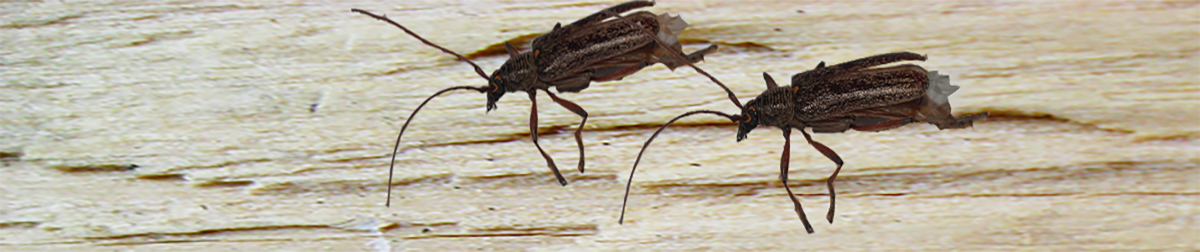
Wood borers are insects that cause damage by tunneling into and feeding on wood. Common types include beetles, such as powderpost beetles, and larvae of wood-boring moths. These pests infest dead or decaying wood, but some species attack live trees and wooden structures. Their life cycle involves egg-laying on or in wood, with larvae doing the most damage as they tunnel and create galleries, weakening the wood. The frass (sawdust-like waste) they produce is a telltale sign of infestation. Wood borers play a role in breaking down and recycling wood in nature, but they can be destructive in homes and industries.
Wood borers, particularly beetles, have distinct features that aid in their wood-damaging habits. Adult wood borers are typically small, ranging from 2 to 25 mm. Their bodies are elongated and cylindrical, with hard exoskeletons, often dark brown or black. They have strong mandibles for chewing wood and antennae that can be quite long and segmented. The larvae, which do most of the damage, are creamy white, worm-like, and have soft bodies with distinct segmented sections. These larvae burrow into wood, creating tunnels that weaken the structure. Adult wood borers often display distinctive patterns or textures on their elytra (hardened forewings).
Work With Safety Measures
Eco Friendly Services
Award Winning Service
Same Day Service
Customised Solution
Digital service tracking
Digital job status updates
Auto complaints action
Certified Technicain
Govt. Registred Company
Verified Service Provider
Human Safe Chemicals